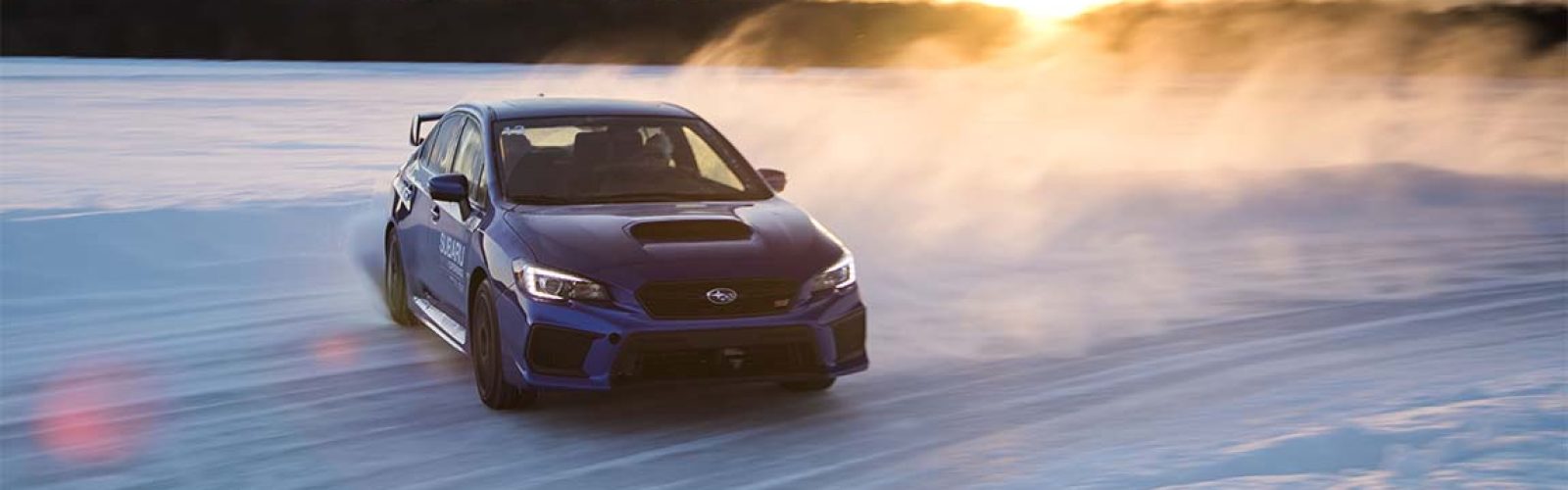
Many a Monte Carlo Rally has been decided by the same factor.
As recently as last year, Adrien Fourmaux attempted to swing the balance of power by bolting some softs onto his Hyundai, in the hope that what he lost in the ice of the final morning he’d recover in the thaw.
It didn’t work, but it spiced the spectacle up and gave runner-up Elfyn Evans plenty to think about at least.
Wind the clock further back, and there was the showdown of the Sébastiens: Loeb vs Ogier at the dawn of the Rally1 hybrid era. On that occasion, a puncture promoted Loeb to the head of the pack.
And then of course there was Ari Vatanen’s amazing comeback drive from a penalty in 1985, where the studs on his Peugeot allowed him to not just pass Walter Röhrl (on intermediates) on the leaderboard, but also on the Col St Raphaelstage.
You get the idea. The importance of tires cannot be underestimated – no matter where, or what, you’re driving.
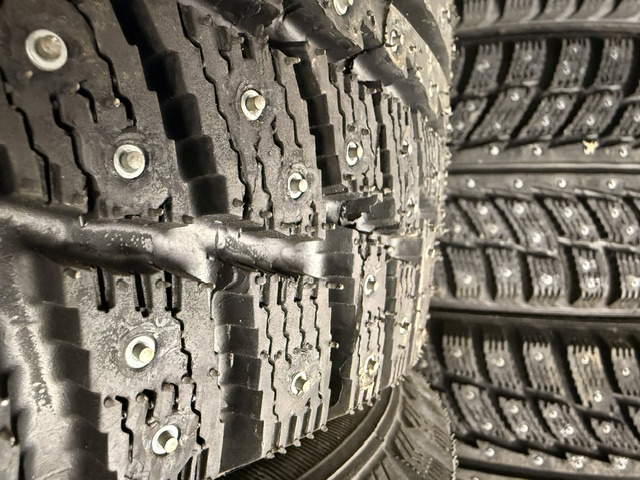
Studs are needed for grip on the ice, but too many isn't helpful for learning
“It’s the only thing between you and the surface,” says 2004 Junior WRC champion Patrik Sandell. “So that’s the connection point with you and Mother Earth. It’s so important to have the right tires for the environment you’re in.”
Sandell never contested the Monte in the 41 WRC events he started, but he does have plenty of experience in his home country of Sweden – where tires are arguably even more important (if slightly less decisive to the rally’s outcome).
“It’s an unreal feeling to drive with a proper studded tire in competition,” Sandell says, before dropping some fascinating insight.
“And also, I think why, at least in the past, non-Scandinavian drivers have had kind of a challenging time to win Rally Sweden is that you have to look for grip all the time with your eyes.
You need to just to look on the surface and see is it snow, is it ice, because the grip level is so different if you are in the ruts.
“That’s where the grip is, or if you slide out of the line, and you’re out in the loose snow, because if you are in the loose, deeper snow, the stud will not help you at all, because then you need to get the stud down to the ice for it to get some grip.
“And so sometimes that goes against almost everything [you know]. Sometimes you have to be even more aggressive on the throttle or on the brake to get the stud through the snow down to the ice to get it to work, if that makes any sense.”
It does, and it’s pertinent considering what Sandell’s involved in today.
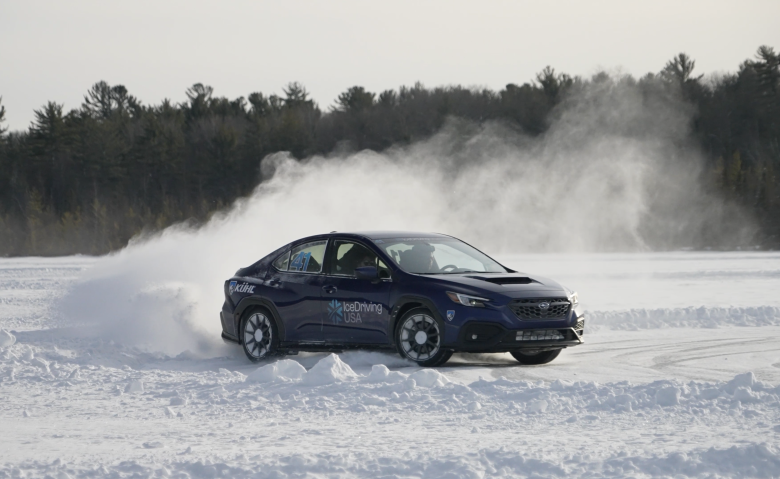
Ice Driving USA, in association with DirtFish, is the most comprehensive and fun winter driving school anywhere in the world. Just one of the areas it excels is the resource available.
As you may have guessed considering the direction of this article, that of course includes the tires.
“We use Lappi tires, which are recognized as the best in the world for these conditions, and each has 520 studs at 3mm in length,” Sandell explains.
“This gives you the perfect amount of grip on ice because you don’t want the car to feel like it’s on Tarmac,” he grins. “You still want to drift around, but it gives you enough grip in braking, it gives you enough grip in acceleration, to be able to have a lot of fun with the car on ice without feeling that you are out of control.
“You kind of want to feel that you are in control, but in a loose way. The car can drift from side to side, but you are still the driver.”
To put the tire into WRC terms, Sandell estimates they offer twice the grip of the studded tire (the grippiest option available) used in Monte Carlo, but are maybe half as grippy as the Rally Sweden tire which is narrower and designed purely to get the car from point A to point B as quickly as possible.
Ice driving is a very good way of pushing you over your own limit to find your next level of limitPatrik Sandell
At Ice Driving USA, the onus is on having that slip in the car so that the driver equally enjoys themself but also learns something.
“The whole idea is that we don’t want the experience to be so much focused on the tire,” Sandell explains. “We want the car to shine. The tire we are providing is giving enough grip in acceleration and braking and lateral grip for you to be in charge of your input on the steering wheel.
“Because if you drive with a non-studded tire on ice, it’s not you that is in control. You turn the wheel and nothing happens forever and ever and ever. Or you go on a brake or accelerator and nothing happens. And then it’s not really you that can develop as a driver. It’s more just you adapting to the conditions that are there for the day.
“But with the studded tires we have, they give you enough grip so in any weather condition, it’s always you that is in control of your vehicle and you can develop as a driver throughout the course.”
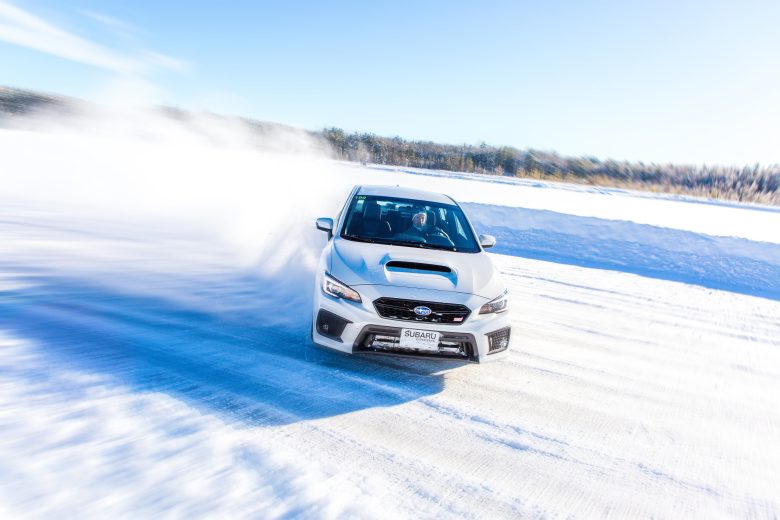
Whether you're a beginner, a pro or simply after some fun, everyone takes something away from Ice Driving USA
Sounds fun, doesn’t it? The good news is spots are still available, but you best be quick before I beat you to it.
“[As a Swede] I might be biased, but for me it’s the most fun you can have because the car is loose at all times, so you’re drifting from corner to corner, combining different corners,” Sandell smiles. “It’s just like the very best feeling you can have.
“And also it’s a very safe way of learning to drive because you can push your limits and you can be above your limits and the worst thing that happens is that you get stuck in a snowbank. When you push your limits on gravel or asphalt it always ends up in a very expensive crash in one way or the other.
“So I think also ice driving is a very good way of pushing you over your own limit to find your next level of limit. And that’s very hard to do in any other way without spending millions and millions of dollars.”
Book your Ice Driving USA course today.