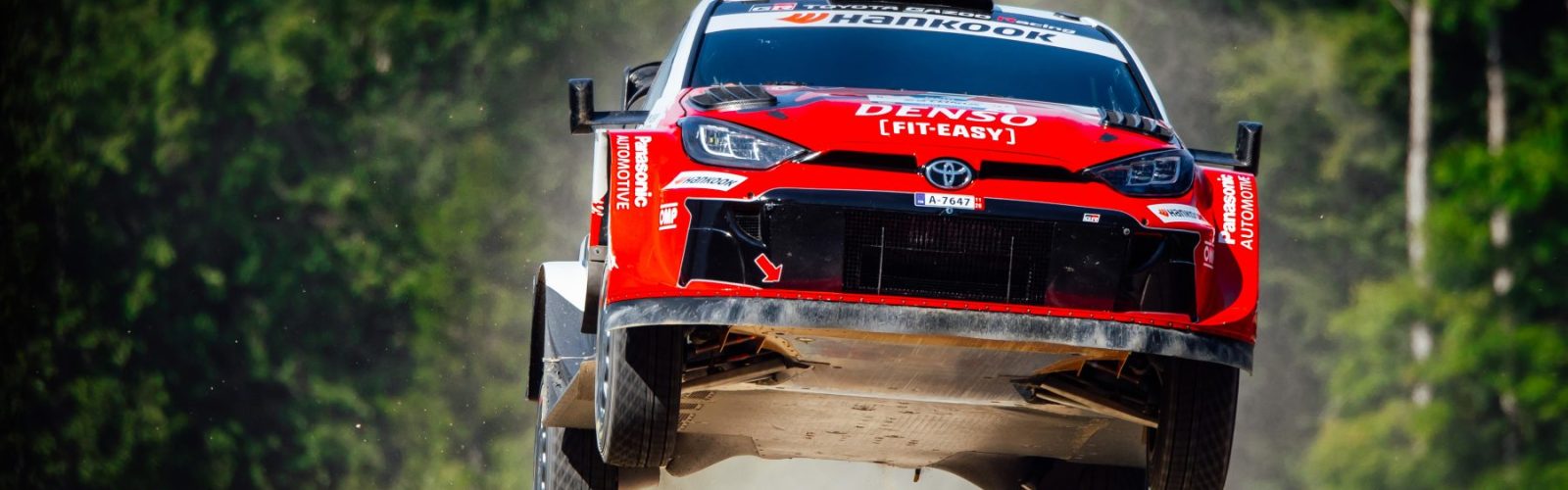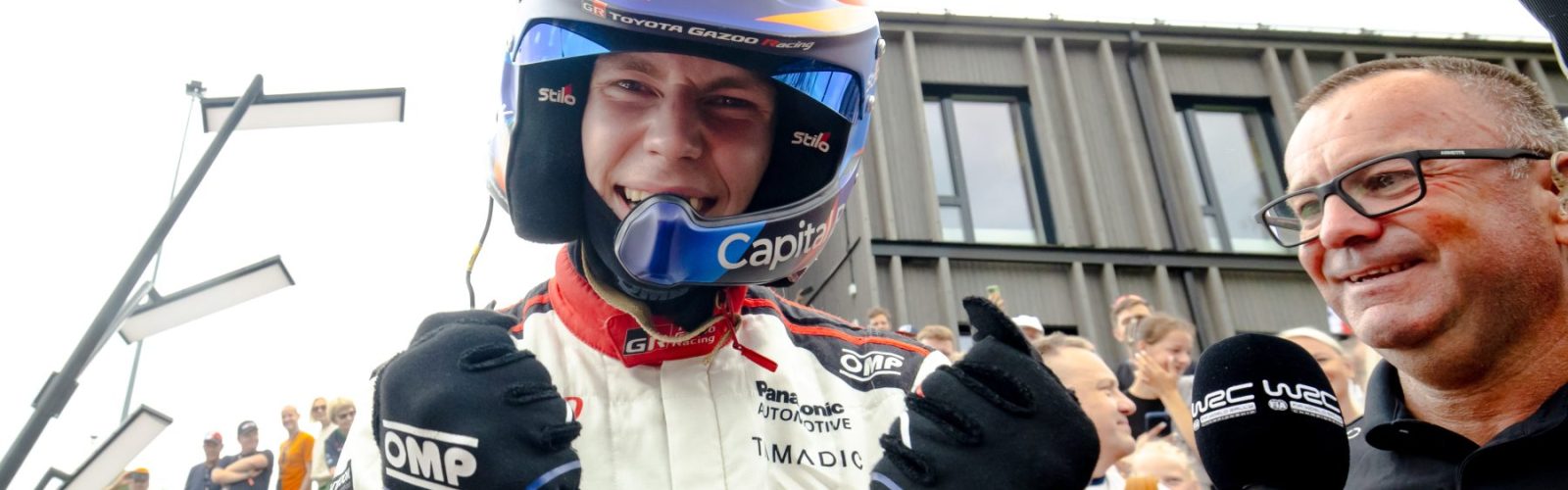
Sami Pajari claimed the first victory of his World Rally Championship career with a dominant performance at Rally Estonia.
Leading the event from start to finish, he beat Toyota team-mate – and last year’s Estonia winner – Oliver Solberg by 19.5s with Adrien Fourmaux fending off Hyundai team-mate Thierry Neuville to complete the podium.
Pajari became the sixth different winner of 2026, with all five of Toyota’s drivers now having won a round of the WRC. He extended his own podium record to six – more than any other driver so far this season.
Elfyn Evans extended his lead of the championship to 25 points despite finishing sixth in Estonia. That was because Takamoto Katsuta finished outside the points due to retiring from Friday’s leg with two damaged tires, one stage from the end of the day.
Pajari is now up to third, 33 points behind Evans and eight adrift of Katsuta with Sébastien Ogier (fifth in Estonia) another five behind. Solberg is 47 down on leader Evans, having claimed all 10 Super Sunday points.
Crossing the finish line, Pajari released his emotions, leaping out the car, pointing to the Toyota badge on the nose of his GR Yaris Rally1 and hugging family and friends.
“It’s something so amazing. Maybe I didn’t really realize what I have just done,” Pajari said.
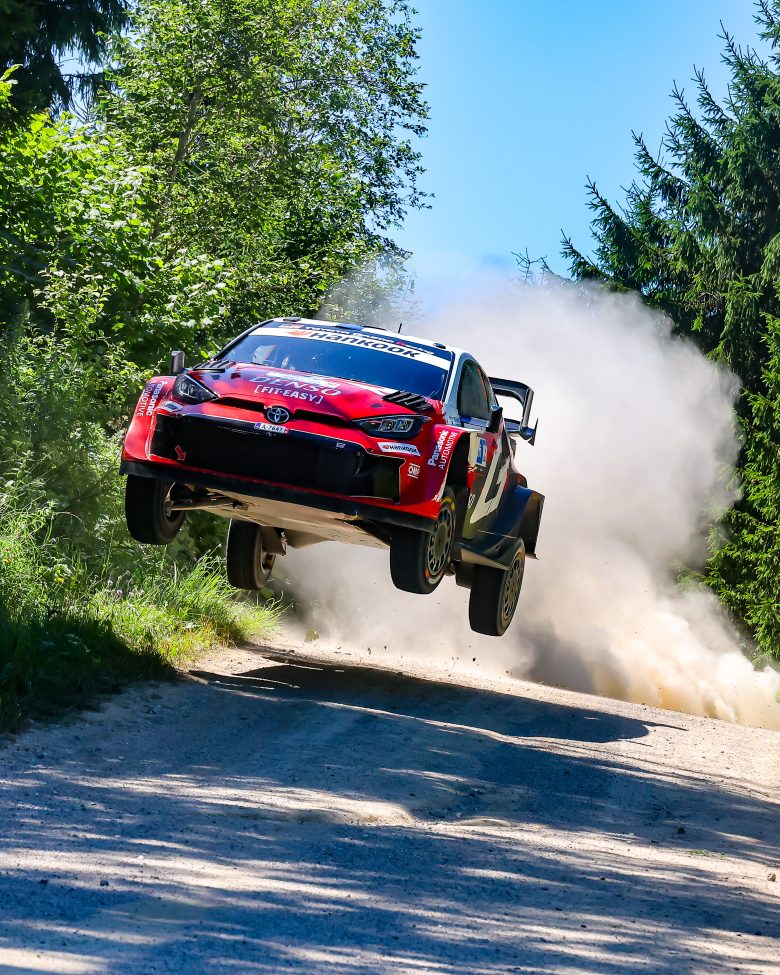
Pajari was in a class of his own at Rally Estonia
“Thanks to everybody working at Toyota Gazoo Racing, I’m super, super happy for you and super grateful. Thanks for trusting me and supporting me. Thanks to all my family, my friends, everyone who has stood behind me even when there were some tricky times – this is for you.
“Last but not least I want to thank myself for not giving up and going for it once again. We knew it was coming, there was no doubt, but now we have done it.”
Solberg never truly had an answer to Pajari’s pace in Estonia, struggling to find the ultimate comfort after a bruising run of results. Second place was his first podium result since May’s Rally Portugal.
Fourmaux’s third place was his second podium of the season, denying Neuville an Estonia podium for the first time since 2022. Ogier completed the top five, 33.2s behind Neuville.
Mãrtiņš Sesks led M-Sport’s charge in seventh place, claiming three top-three stage times throughout the weekend.
The Latvian was compromised from the start after clipping an anti-cut device on Friday morning’s shakedown and damaging the steering and underside of his Ford Puma Rally1.
Although his car was repaired in time for the rally to start, Sesks left service two minutes late and incurred a 20s time penalty – though this ultimately didn’t affect his overall position.
Esapekka Lappi finished 27s behind Sesks in eighth place, making his first WRC start since Safari Rally Kenya. The Finn was on the podium the last time he tackled Rally Estonia (2023), but was perplexed by a lack of pace in 2026 – peaking with a sixth-fastest time.
“I’ve been quite satisfied with the car most of the rally, but my times don’t match the feeling,” Lappi reflected. “It feels really good, so I don’t know what I need to do next week to try and find something for Finland but it was a disappointing weekend.”
Jon Armstrong finished ninth after dropping half a minute on the first stage when a tire punctured following an awkward jump landing. That left the M-Sport driver near the front of the running order for Saturday and Sunday.
Team-mate Josh McErlean finished outside the points after he retired from Saturday’s leg with an exhaust manifold issue.
The top 10 was completed by the leading Rally2 car, driven by Robert Virves. Defending his WRC2 victory from Rally Estonia last year, Virves’ win was his third from as many championship starts this year, and earned him an additional €25,000 courtesy of a WRC Promoter grant finishing as the top Estonian.
Teemu Suninen was second in WRC2, 7.6s behind Virves’ Škoda at the finish after overhauling Roope Korhonen on the powerstage by 1.2s.