Jérôme Roussel doesn’t hesitate. The answer is as plain as it is simple. The question? What’s the biggest challenge for an organizing team in world motorsport?
Roussel is the FIA’s cross-country and regional rally category manager, but that’s just the here and now. He’s been around the block, seen global motorsport in all its guises and from a wide variety of roles.
“Rallying.”
That’s the answer. Unequivocally. Forget Formula 1. And Dakar. It’s rallying.
“Very simply,” Roussel added, “this is what I believe. The WRC is the most complicated thing to organize in motorsport. Formula 1, or circuit racing in general, by comparison, is an easier thing, because Formula 1, you come to a homologated track, you have a specification, you come with all your people, all your stuff – sometimes you even replace what’s in place – and you run the event.
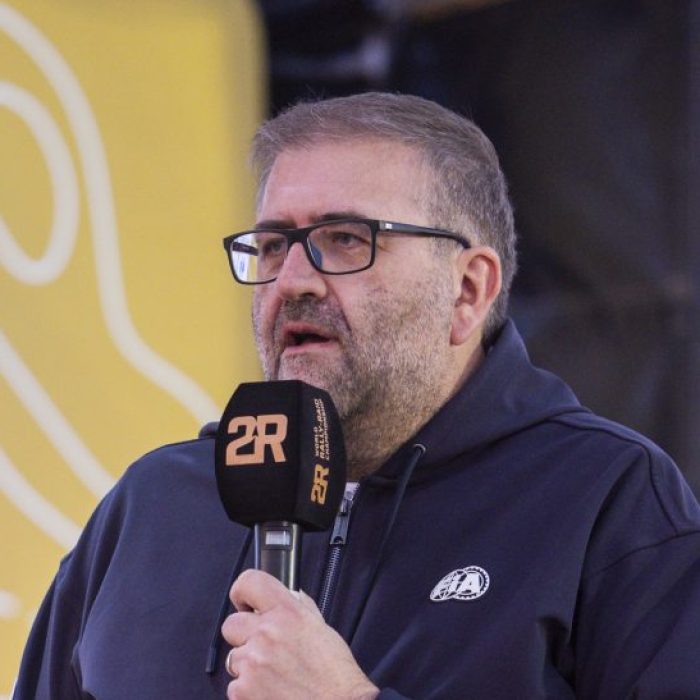
We saw multiple small issues, but there is nothing which cannot be solvedJérôme Roussel
“In rallying, it’s much more complicated because you need to design an itinerary, you need to synchronize hundreds or thousands of people all around the route. You need to align and work with the local authorities, you need to plan multiple facilities. Organizing a WRC event is just like running three Formula 1 tracks at the same time – but this will not be a five-kilometer Formula 1 track, it will be 20 kilometers.
“Even when you look to the World Rally-Raid Championship, it’s more simple because it’s one stage each day and you don’t close the roads, which is the biggest difference. You have one stage in the morning, one stage start, one finish and after the finish you go to the bivouac. Then, you even don’t have a timed service. The WRC is much more complex.”
It’s fair to say, May’s Saudi Arabian Candidate event raised concerns. The joint response between the FIA, the Saudi Automobile & Motorcycle Federation (SAMF) and the Saudi Motorsport Company (SMC) was swift and came with the establishment of a Roussel-led taskforce.
“It’s correct that this is a short timeline from May to November when we are running the event,” said Roussel.
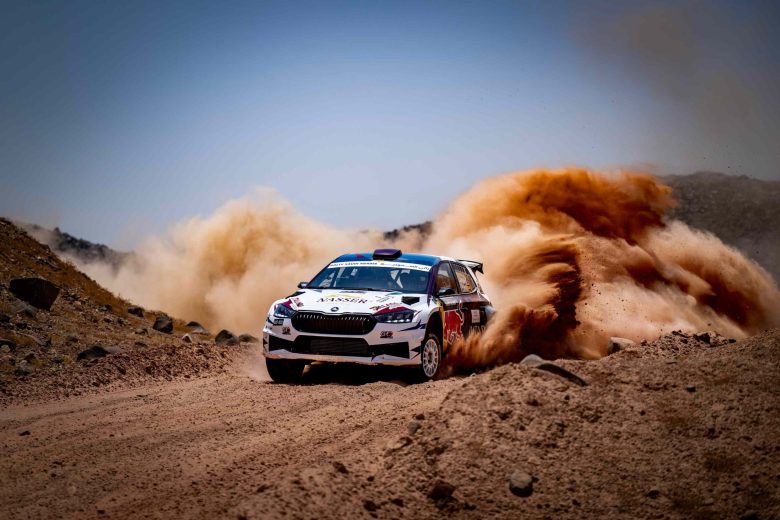
Nasser Al-Attiyah took victory on Saudi's Middle East championship round which served as a WRC test event
“After May the assessment was made from the Candidate event, then we looked at the options to close some of the gaps. Of course it’s late, but in motorsport everything runs to a tight deadline. But we didn’t see any problems that cannot be solved.”
That last line is the crucial one as November 26 and the start date for Rally Saudi Arabia moves into view.
“The taskforce is focused on two things: sporting and safety. The beauty of the podium, the ceremonial start, this is not our main preoccupation. We are working on the fact that the crews, who will possibly be playing for the various FIA world championship titles, will have stages starting on time and they will be feeling safe in those stages. When this happens, for me, the work of the taskforce will be done.
“When we came from the Candidate event, we saw multiple small issues, but each individual issue, when you take them one by one, honestly, there is nothing which cannot be solved. So that’s the good thing. And now we are just involving and trying to support in every way to find the right people that will be able to come and help and support, to have the proper structure.
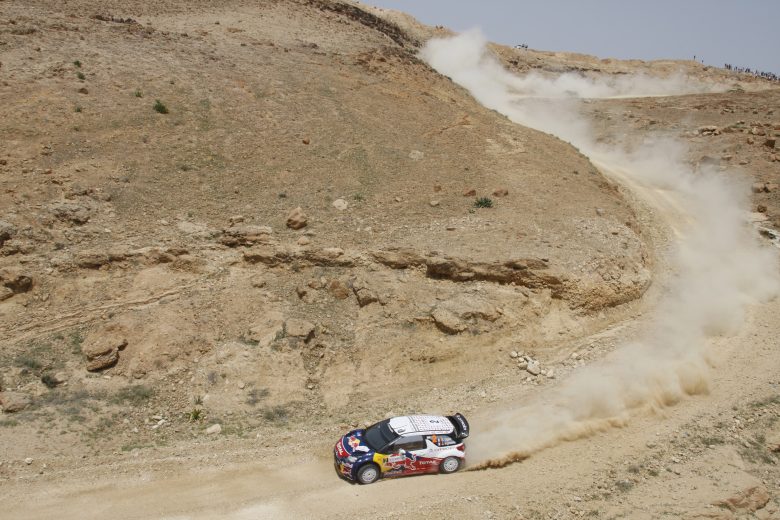
WRC last visited Middle East in 2011, when Sébastien Ogier won Rally Jordan
“We want to avoid too many people, sometimes this can create confusion. So the main idea is that everything we are doing is to help to train, develop and support the local ASN. The purpose is not to come and do on its behalf, it’s to equip the people with the knowledge, with the proper training that will help them to deliver.
“On the first year, every new organizer needs external support. But the target is that this external support will not come, get paid, go back and come the next year to do the same thing. It’s about leaving a legacy, a local organization ready to carry this forward.”
With some of the world’s finest co-drivers – including Timo Rautiainen, Kuldar Sikk and Nicolas Klinger – onboard, there’s no shortage of faith in the taskforce’s ability to deliver.